27. Water quality ( TDS Sensor )
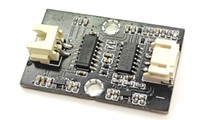
27.1. Introduction
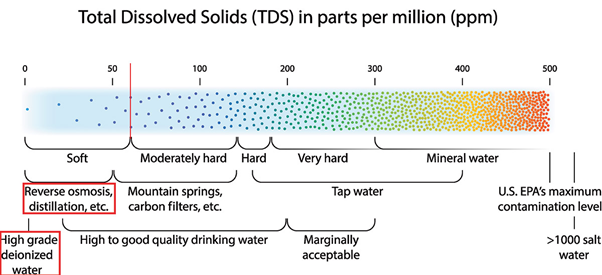
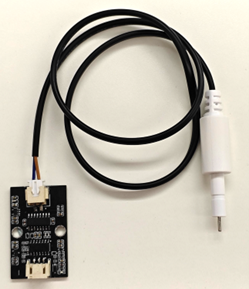
The TDS (Total Dissolved Solids) sensor measures the concentration of dissolved solids in water, providing an indicator of water quality the unit is ppm (mg/L). It is widely used by hobbyists, engineers, and researchers to assess the purity of water for various applications. *** But it does not show how dirty the water is. ***
27.2. The principle
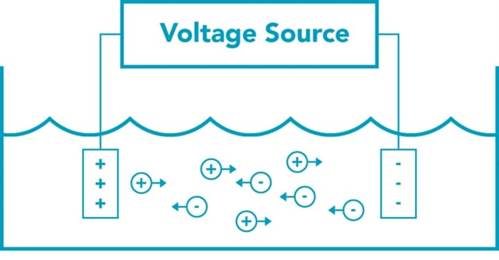
The TDS sensor operates by measuring the electrical conductivity of water, which correlates with the concentration of dissolved ions. Higher conductivity indicates a higher TDS level, reflecting increased dissolved solids such as salts, minerals, and metals.
27.3. Specification
Input Voltage: DC 3.3 ~ 5.5V
Output Voltage: 0 ~ 2.3V
Working Current: 3 ~ 6mA
TDS Measurement Range: 0 ~ 1000ppm
TDS Measurement Accuracy: ± 10% F.S. (25 ℃)
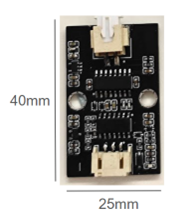
Module Interface: XH2.54-3P
Electrode Interface: XH2.54-2P
27.4. Pinout Diagram
| Pin | Function |
|---|---|
| G | Ground |
| V | Vlotage Supply |
| S | Signal (Analog) |
27.6. Quick to Start/Sample
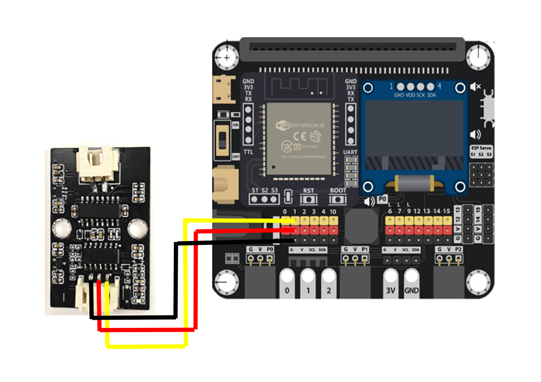
Connect the module to development board (direct plugin or using wire)
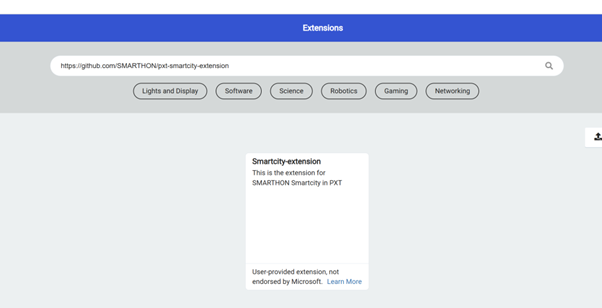
Open Makecode, using the https://github.com/SMARTHON/pxt-smartcity-extension PXT
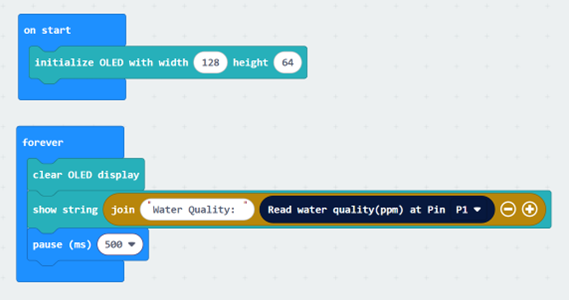
Initialize the OLED and show the concentration of different dust value on the OLED screen
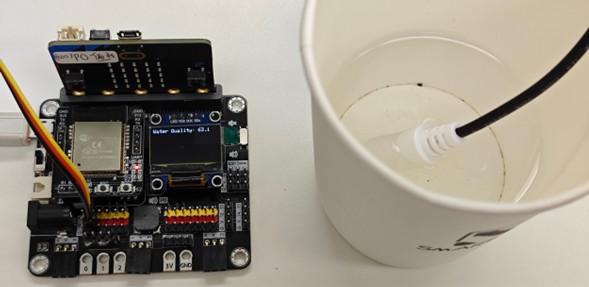
27.7. Result
27.8. FAQ
Q: Why are my readings unstable or does the value look unnormal?
A: Ensure the probe is clean and submerged properly; temperature changes can also affect accuracy.